Overview:
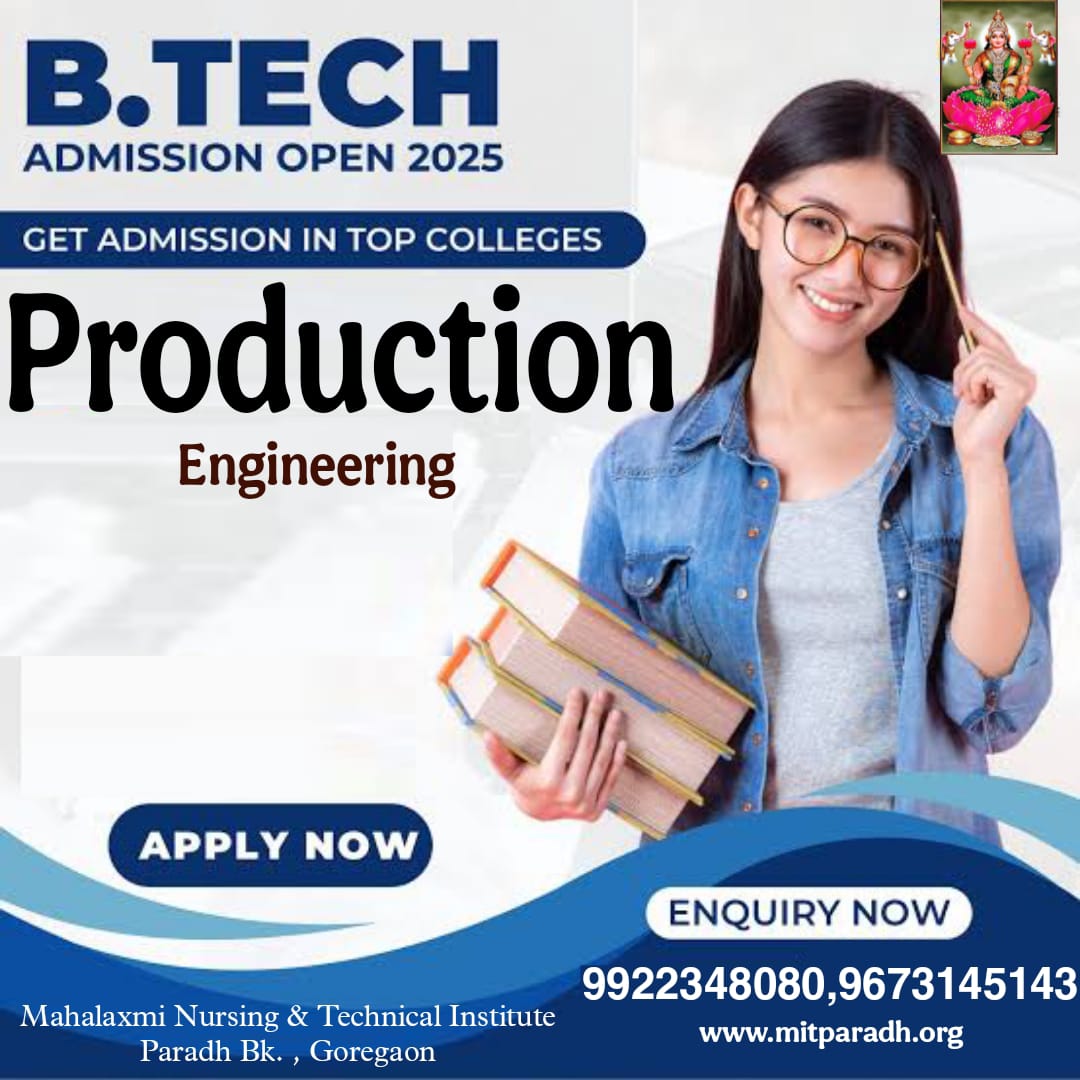
BTech In Production Eligibility Criteria 12th Science Pass With MHT-CET A BTech in Production Engineering is a four-year undergraduate degree program that combines management principles with manufacturing technology to design, implement, and manage efficient production processes and systems. Graduates learn to optimize complex processes, improve product quality, control costs, and manage industrial operations across various manufacturing sectors. The curriculum includes subjects like manufacturing technology, operations management, quality control, and industrial automation, with career opportunities in roles such as Production Engineer, Industrial Manager, and Quality Engineer. What You Will Study The BTech Production Engineering program blends core engineering concepts with specialized production knowledge, including: Manufacturing Technology: Focuses on the design and efficiency of manufacturing processes. Operations Management: Deals with planning, controlling, and improving production processes for maximum productivity. Quality Control: Teaches methods to ensure product quality and consistency. Industrial Engineering: Involves analyzing and optimizing complex systems to improve efficiency and output. Production Planning & Control: Covers strategies for managing production schedules and resources. Industrial Automation & Robotics: Explores the use of automated systems and robots in manufacturing. Supply Chain Management: Focuses on managing the flow of goods and services in the production process. Key Skills Gained Designing and optimizing production systems. Implementing quality control measures. Managing industrial operations effectively. Utilizing CAD/CAM, and lean manufacturing techniques. Improving overall efficiency, quality, and cost-effectiveness in production. Career Opportunities Graduates of this program are well-suited for various roles in manufacturing industries, including: Production Engineer: Manages and improves production processes. Manufacturing Engineer: Designs and oversees manufacturing processes and systems. Quality Engineer: Ensures that manufacturing processes generate consistent and suitable output. Industrial Manager: Oversees industrial operations and production planning. Process Engineer: Focuses on the planning, design, and optimization of production processes. A B.Tech in Production Engineering provides diverse job opportunities in the industrial and production sectors, leading to roles in manufacturing, quality control, and operations management with good earning potential. The degree equips graduates with valuable skills in applying management science to optimize production processes for cost-effectiveness and improved quality. This technical and managerial skillset is highly sought after in various industries, including automotive, oil and gas, and textiles, and also opens doors to government and teaching positions. Career Advantages Industrial & Production Expertise: You gain specialized knowledge in running and managing factories and industries, focusing on cost control, enhanced productivity, and product quality. Diverse Industry Opportunities: Graduates find roles in core manufacturing industries like automotives, refineries, textiles, and automation, as well as public sector organizations. Creative & Problem-Solving Skills: The program provides a platform to apply creative ideas and scientific knowledge to solve complex industrial problems and improve processes. Hands-on Experience: You get to experiment and work with modern tools and equipment, building practical skills valuable in the industry. Good Earning Potential: The scope and demand for skilled production engineers lead to profitable salaries and good incentives from top companies. Job Opportunities & Sectors Core Sector Roles: Process Engineer, Production Support Engineer, Quality Control Analyst, Operations Analyst, Manufacturing Engineer. Industries: Automotive, textiles, oil and gas (refineries), automation, and other manufacturing sectors. Public Sector: Opportunity to work in government organizations like NTPC, SAIL, ONGC, AAI, and HAL after qualifying relevant exams. Teaching Profession: Options to work as a faculty member in engineering colleges offering production or mechanical courses. Professional Development Further Studies: You can pursue higher education by preparing for competitive exams like GATE to gain entry into postgraduate programs. Networking: The degree encourages interaction with like-minded individuals and provides opportunities to join professional groups, aiding in career advancement. Entrepreneurship: The skills gained can also be leveraged to start your own business.
This includes following
Register Here
-
 Videos
-
8 Chapter
-
Duration:48 Month
-
NA hour
-
Certificate : Yes