Overview:
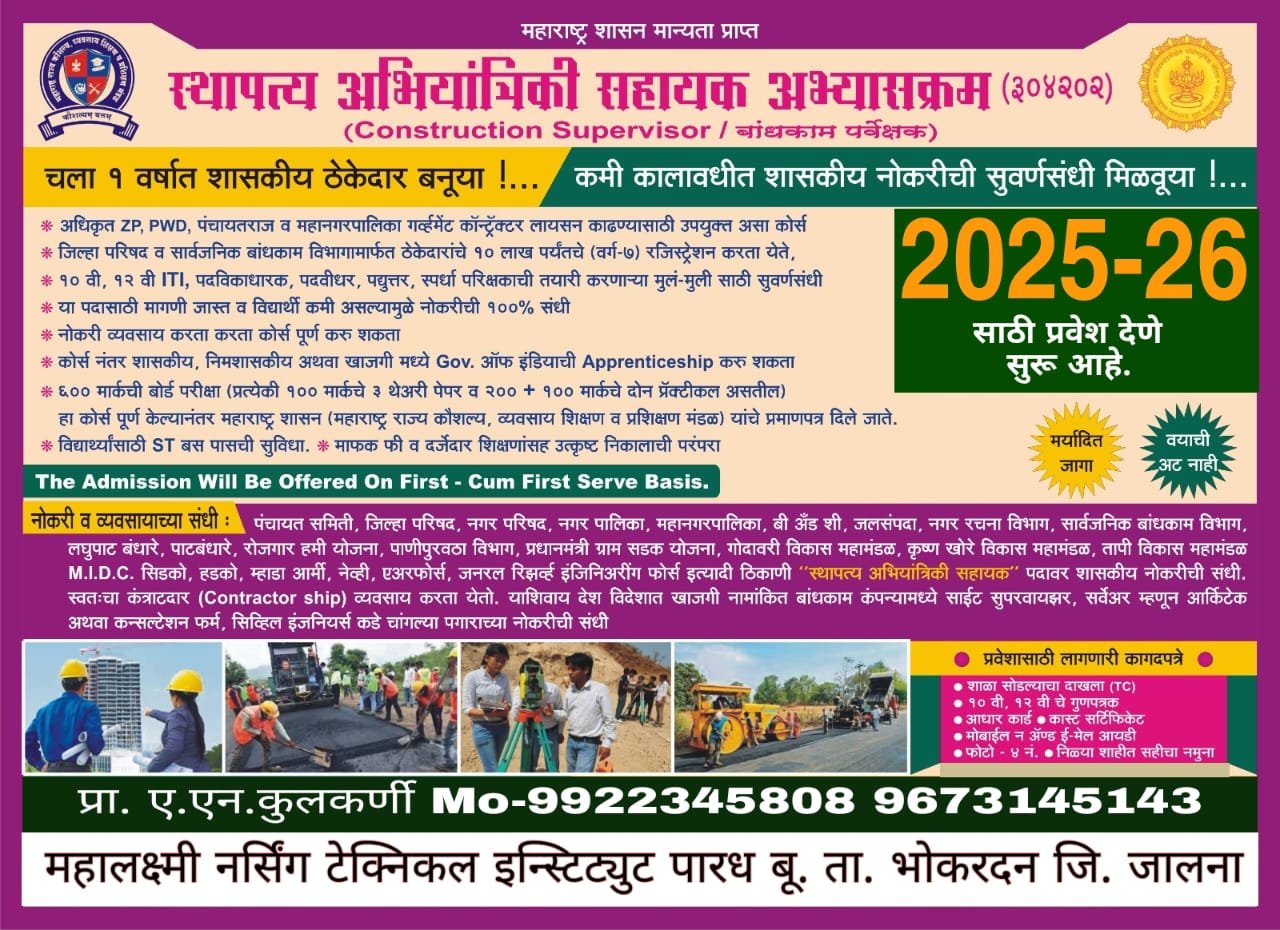
Diploma In Civil Engineering Eligibility Criteria 10th Pass A Diploma in Civil Engineering is a 3-year vocational/technical program after 10th grade focused on practical skills for infrastructure planning, design, and construction, covering topics like structural engineering, transportation, and surveying. Graduates are prepared for entry-level positions, can pursue higher studies, or start their own businesses. The curriculum provides theoretical knowledge and hands-on training in project planning, construction management, and the use of drafting tools. What You'll Learn The diploma program covers a broad range of fundamental civil engineering concepts and practical skills, including: Structural Engineering: Understanding mechanics of structures and design of concrete structures. Construction: Methods for building and maintaining infrastructure like buildings, roads, and dams. Surveying: Techniques for measuring and mapping land. Geotechnical Engineering: The study of earth and its properties for construction. Transportation Engineering: Design and planning of transportation systems. Computer-Aided Drafting (CAD): Using tools like AutoCAD for architectural and structural drafting. Key Aspects of the Program Duration: Typically a 3-year program with 6 semesters. Eligibility: Usually requires completion of 10th grade (SSLC/THSLC). Practical Training: The curriculum includes practical sessions, internships, and site visits to provide hands-on experience. Career Opportunities A Diploma in Civil Engineering opens doors to various roles in the construction sector: Entry-Level Positions: Graduates can work as site supervisors or in technical roles within construction companies. Entrepreneurship: The skills gained can be used to start entrepreneurial ventures in the construction industry. Further Education: The diploma provides a strong foundation for those wishing to pursue a bachelor's degree in civil engineering. A Diploma in Civil Engineering offers benefits including a faster entry into the workforce, a focus on practical industry skills, cost-effective education, a foundation for higher studies, and diverse career paths in government and private sectors, contributing to infrastructure development and urban planning. Career-Focused Benefits Rapid Employment: A diploma is shorter than a degree, allowing you to enter the workforce and gain practical experience sooner. Practical Skills: The curriculum emphasizes hands-on, industry-relevant skills, preparing you directly for jobs in construction, design, and planning. Diverse Job Roles: You can work as a site engineer, surveyor, draftsman, construction supervisor, quality control engineer, or project manager in a variety of industries. Infrastructure Contribution: You'll play a role in designing, constructing, and managing essential infrastructure like roads, buildings, and water systems. Educational Benefits Cost-Effective: A diploma provides a more affordable pathway into the engineering field compared to a full bachelor's degree. Gateway to Further Education: The diploma serves as a strong foundation, allowing for credit transfers into undergraduate civil engineering programs for those who wish to pursue higher studies. Other Advantages Broad Industry Scope: Civil engineering offers a wide range of industries to work in, including construction, government agencies, consulting firms, and urban planning. Entrepreneurship: The knowledge gained can also be a stepping stone to starting your own construction or consultancy business. Stable Career Growth: With experience and further skill development, diploma holders can advance to higher-level positions within the industry.
This includes following
Register Here
-
 Videos
-
6 Chapter
-
Duration:36 Month
-
NA hour
-
Certificate : Yes